

SKIN CANCER CHECKS
& SKIN CONDITIONS
Smart Prevention and Skin Management for Healthy skin
Today's UV Index
Skin Cancer Awareness: A Message for Our Patients
Do you know that at least 2 in 3 Australians will be diagnosed with skin cancer in their lifetime!!!
And Queensland has the highest rate of skin cancer in the world. Living in a sunny climate brings many benefits, but it also means that protecting your skin and checking it regularly is very important.
Skin cancer can affect people of all ages and skin types, however the good news is that most skin cancers are treatable when detected early. Hence this is why regular skin checks are so important!
Why Skin Cancer Is So Common in Queensland
Queensland’s high rates of skin cancer are linked to:
- High levels of ultraviolet (UV) radiation throughout the year
- Strong sun exposure, even on cooler or overcast days
An outdoor lifestyle involving work, sport and recreation (for example, a brief work in the yard usually leads to a longer time than we think!)
Sun damage accumulates over time, meaning that childhood and early adult sun exposure can increase your risk later in life.
Skin Cancer Checks
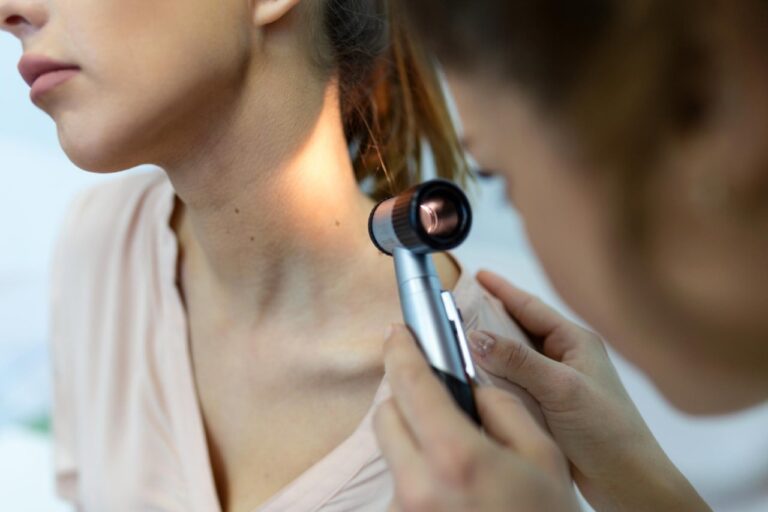
Living in Queensland, we have one of the highest rates of skin cancers in the world, so regular skin cancer checks are vitally important! Early diagnosis of skin cancer can save your life.
In general, we recommend performing a self-skin check every 6 months, and visiting your doctor for a thorough examination every 2-3 years. This may vary depending on your skin type and lifestyle.
Fortunately, skin cancer checks are easily accessible and can help with the prevention and early detection of skin cancers. Our doctors are skilled in skin examination, taking biopsies and excision of skin lesions.
Book a skin examination appointment with Dr Joe Lee. Please arrive prepared with no makeup or nail polish.
Types of Skin Cancer
The most common types of skin cancer include:
- Basal Cell Carcinoma (BCC): usually slow-growing but can cause local damage
- Squamous Cell Carcinoma (SCC): may spread if not treated early
- Melanoma: the most serious form, which can spread rapidly if undetected
Early diagnosis significantly improves treatment outcomes for all types.
What to Look For
We encourage patients to be familiar with their own skin and report any changes. Please book an appointment if you notice:
- New moles or spots
- Changes in size, colour, shape, or texture of an existing mole
- Spots that bleed, itch, or do not heal
A helpful guide is the ABCDE rule:
- Asymmetry
- Border irregularity
- Colour variation
- Diameter greater than 6mm
- Evolving or changing over time – i.e. Getting lumpy
What is Melanoma?
Melanoma is a type of skin cancer that can be deadly if not caught early. Skin cancer checks are important because they can help catch melanoma in its early stages, when it is most likely to be successfully treated.
To look out for melanoma, watch for changes in the size, shape, or colour of a mole, or for any new growths on the skin. If you have any concerns about a mole or growth, talk to your doctor. The treatment options for melanoma include surgery, radiation therapy, and chemotherapy.
Sun Protection Is Essential All Year Round
Australia has one of the highest rates of skin cancer in the world. Anyone can be at risk of developing skin cancer, though the risk increases as you get older.
Sun Protection Is Essential All Year Round
The majority of skin cancers in Australia are caused by exposure to UV radiation in sunlight.
In Queensland, UV levels are often high even outside summer months = “Stay under a tree or stay indoors above three” (i.e. UV index is 3 and above).
Where to find out about UV index?
For best protection, when the UV level is 3 or above, we recommend a combination of sun protection measures:
- Wear sun-protective clothing
- Apply broad-spectrum, water resistant SPF 50+ sunscreen
- Wear a wide-brimmed hat and sunglasses to protect your face, head, neck and ears
- Use Australian standard sunglasses
- Reduce time spent in direct sunlight and seek shade between 10am and 4pm
- Reapply sunscreen every two hours and after swimming or sweating
- Apply 20 minutes before going outdoors
Checking Your Skin: Tips & Tricks with Dr Joe Lee

"Melanoma is the least common type of skin cancer, accounting for just 1 percent of all cases, but it’s got the highest fatality rate. Once it’s spread to other parts of the body it has a 10 to 15 percent survival rate. However, the rate of survival increases the earlier you get diagnosed—if it’s caught before it reaches the lymph nodes, the survival rate is over 90 percent—so stay current on your check-ups."
American Cancer Society
Full Skin Checks at Our Clinic
Our GPs offer comprehensive full skin checks, assessing your skin for skin cancer changes from head to toe. If a concerning lesion is identified, we can discuss the most appropriate next steps based on clinical findings.
Services We May Offer Following a Skin Check
Depending on your assessment, our clinic may provide or arrange the following services:
- Cryotherapy: treatment using liquid nitrogen to freeze and remove certain skin lesions, such as sun spots, actinic keratoses
- Skin lesion excision: surgical removal of suspicious or confirmed skin cancers or other lesions, performed under local anaesthetic
- Skin biopsies: sampling of skin lesions for laboratory analysis when diagnosis is uncertain
- Referrals: to dermatologists or other specialists if further management is required
Your doctor will discuss treatment options, benefits, and follow-up care to ensure the best possible outcome.
Early detection saves lives. Protect your largest organ today – SKIN!!!
Other Skin Conditions
In addition to skin cancer checks, our skin doctors at Medsana can also diagnose and create management plans for a range of skin conditions; including, but not limited to:
- Eczema
- Rosacea
- Psoriasis
- Dermatitis
- Hives
- Warts
Skin disorders may be temporary or permanent and vary greatly in symptoms and severity. Some have environmental causes, while others may be genetic.
While most skin disorders are minor, others can indicate a more serious issue, so it is always best to have it checked out by your doctor.