
Why Early Skin Checks Matter More Than Ever in Australia
When was the last time you took a moment to really look at your skin?
For many Australians, it is not something that happens regularly. Skin changes are often easy to overlook, especially when they develop gradually. However, in a country with some of the highest skin cancer rates in the world, paying attention to your skin is not simply a good habit. It is an important part of maintaining your overall health.
Skin cancer remains one of the most commonly diagnosed cancers in Australia, with melanoma representing the most serious form. Recent estimates indicate that more than 17,000 Australians are diagnosed with melanoma each year, making it one of the most common cancers nationwide(Cancer Australia). In addition, two in three Australians will be diagnosed with some form of skin cancer by the age of 70 (Cancer Council), highlighting just how widespread this condition is.
While these statistics are concerning, there is also a strong reason for reassurance. When melanoma is detected early, treatment outcomes are significantly improved, with a five-year survival rate of around 94 per cent (Cancer Australia)
This highlights a key message. Early detection can make a meaningful difference. Many skin cancers begin with subtle changes that are not immediately obvious. Becoming familiar with your skin allows you to recognise these early signs and seek medical advice promptly.
Importantly, skin awareness does not mean diagnosing yourself. Instead, it is about recognising when something appears different and ensuring it is assessed by a qualified medical professional.
Know Your Skin: Why Awareness Is Your First Line of Defence
Your skin is your body’s largest organ and it is constantly changing. Most of these changes are completely harmless and part of normal ageing or environmental exposure. The challenge lies in identifying which changes may require further attention.
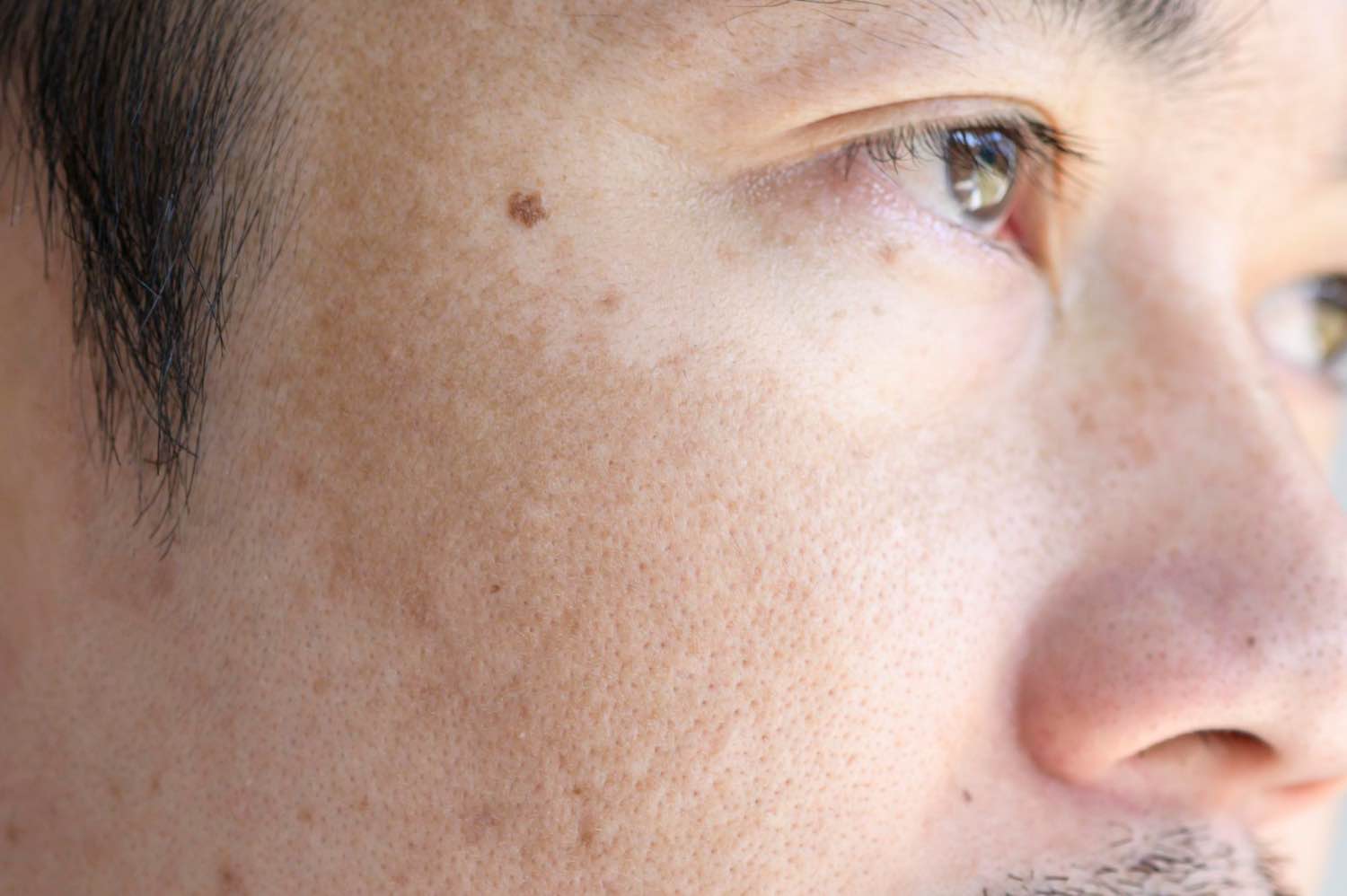
Developing an awareness of your skin is the first step. This means understanding what is typical for you, including the size, shape, and colour of your moles and freckles. When you are familiar with your baseline, even small differences become easier to recognise.
Skin awareness is not about conducting a detailed or clinical self-examination. Rather, it is about noticing patterns over time. You might observe that a mole has darkened slightly, that a new spot has appeared, or that a patch of skin feels different in texture. These observations are valuable, even if they seem minor.
A common misconception is that skin cancer always presents as a dramatic or obvious lesion. In reality, early warning signs are often subtle. Slight irregularities in border, small changes in pigmentation, or a lesion that looks out of place compared to others may be the earliest indicators.
At the same time, it is important to acknowledge the limitations of self-monitoring. While awareness plays a vital role, it cannot replace professional assessment. Doctors are trained to detect patterns and features that may not be visible to the untrained eye. For this reason, self-awareness and professional skin checks should be viewed as complementary rather than interchangeable.
How Often Should You Check Your Skin? A Practical Guide for Australians
Establishing a routine for observing your skin can help ensure that changes are identified early. For most people, a general recommendation is to remain aware of your skin regularly, with a more deliberate review approximately once a month.
This does not need to be time consuming or complex. Over time, it becomes a natural part of your routine, similar to other aspects of personal health.
Certain individuals may benefit from more frequent monitoring. This includes those with fair skin, a history of frequent sunburn, or a personal or family history of skin cancer. In Australia, where ultraviolet radiation levels are high throughout much of the year, cumulative sun exposure is a significant risk factor.
It is also important to approach skin checks with the right mindset. The aim is not to actively search for problems, but to build familiarity. When you know what is normal for your skin, identifying something unusual becomes much more straightforward.
Consistency is key. Regular observation builds confidence and reduces uncertainty, making it easier to decide when medical advice may be needed.
Spot the Warning Signs Early: What to Look for and How to Use the ABCDE Rule
Recognising potential warning signs is one of the most important aspects of skin awareness. Rather than relying on a rigid checklist, it is helpful to think in terms of change, difference, and persistence.
Common Skin Changes You Should Never Ignore
One of the most significant indicators is the appearance of something new. A mole or spot that develops where there was none before should always be noted, particularly if it continues to evolve.
Changes in existing moles are equally important. This may involve an increase in size, a shift in shape, or a change in texture. Some moles may become raised over time, while others may spread or develop irregular features.
In addition to visual changes, certain symptoms should not be overlooked. A lesion that bleeds without injury, becomes persistently itchy, forms a crust, or fails to heal as expected may require further assessment.
Another helpful concept is the “ugly duckling” sign. This refers to a mole or lesion that looks noticeably different from others on your body. Even if it does not fit typical criteria, its uniqueness may indicate the need for closer evaluation.
The ABCDE Rule: A Simple Tool to Identify Concerning Moles
To support early identification, the ABCDE rule is commonly used as a practical guide.
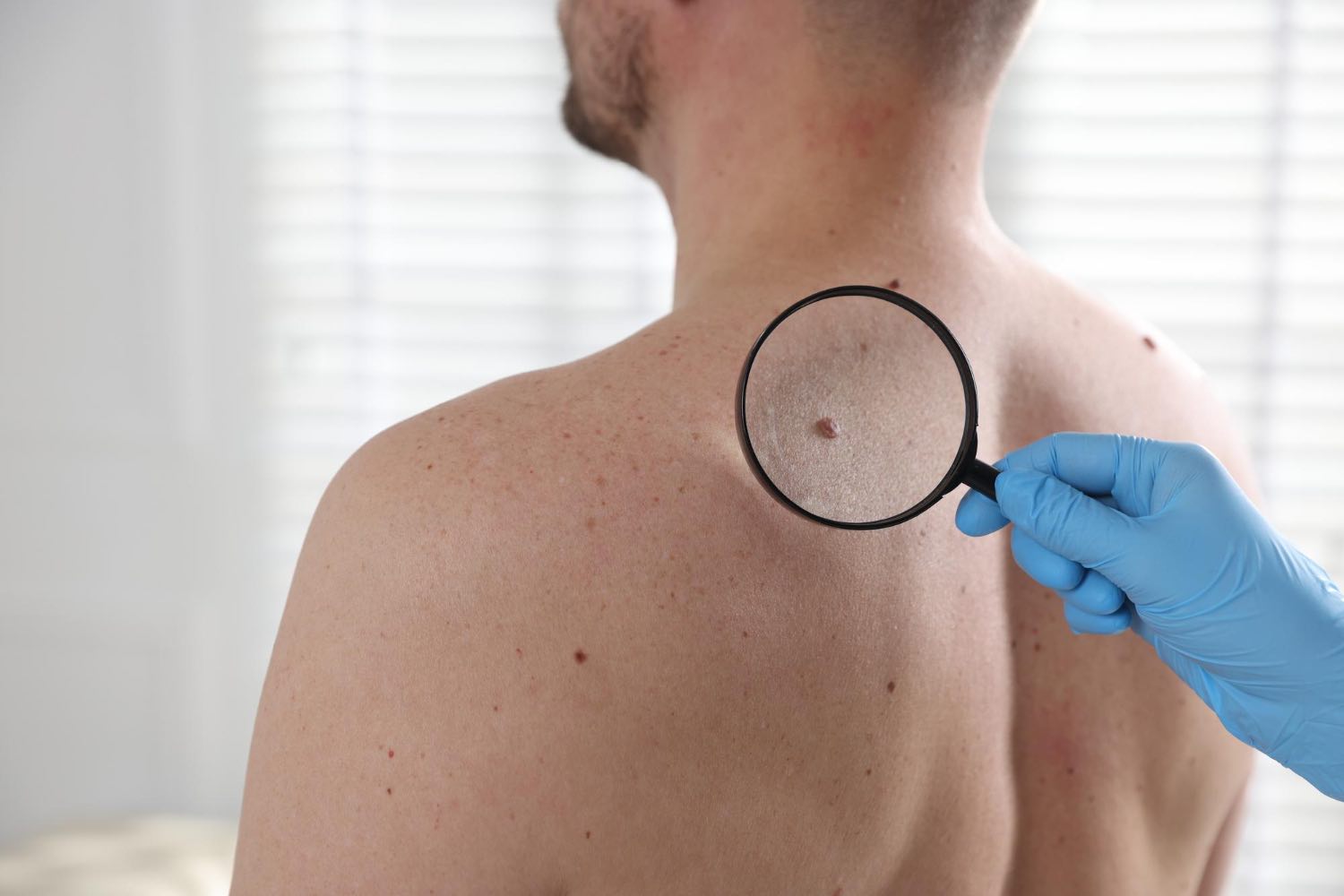
- A for Asymmetry, where one half of the mole does not match the other
- B for Border irregularity, where edges appear uneven or poorly defined
- C for Colour variation, where multiple shades or uneven pigmentation are present
- D for Diameter, particularly when larger than 6 millimetres, although smaller lesions may still be significant
- E for Evolving, referring to any change in size, shape, colour, or behaviour over time
This framework provides a structured way to assess moles and can be particularly useful for those who are unsure what changes may be concerning.
Why the ABCDE Rule Isn’t the Full Picture
While the ABCDE rule is a valuable tool, it is not definitive. Not all skin cancers present according to these criteria. Some may appear small, symmetrical, or uniform in colour, particularly in the early stages.
Relying solely on this method can result in missed warning signs. For this reason, it is important to consider the broader context. Any change that appears unusual or does not align with your normal skin pattern should be taken seriously.
Professional skin checks play a crucial role in this process. Medical practitioners use specialised tools and clinical expertise to identify features that are not always visible or easily interpreted.
If there is any uncertainty, seeking medical advice is always the most appropriate course of action.
When Should You See a Doctor About a Mole? Key Signs You Shouldn’t Ignore
Deciding when to seek medical advice can sometimes feel uncertain. Many people delay assessment because they are unsure whether a change is significant.
- As a general guideline, it is advisable to consult a doctor if you notice:
- Any features consistent with the ABCDE criteria
- A mole that changes noticeably over a short period
- Persistent symptoms such as bleeding, itching, or discomfort
- A lesion that appears different from surrounding moles
In addition, it is important to trust your judgement. If something does not feel right, even in the absence of clear warning signs, a professional assessment can provide reassurance or enable early intervention.
Most skin checks are straightforward and non-invasive. In many cases, they confirm that a lesion is benign. If further investigation is required, identifying concerns early can reduce the need for more complex treatment.
What Happens During a Professional Skin Check?
Understanding what to expect during a skin check can help reduce uncertainty and encourage timely assessment.
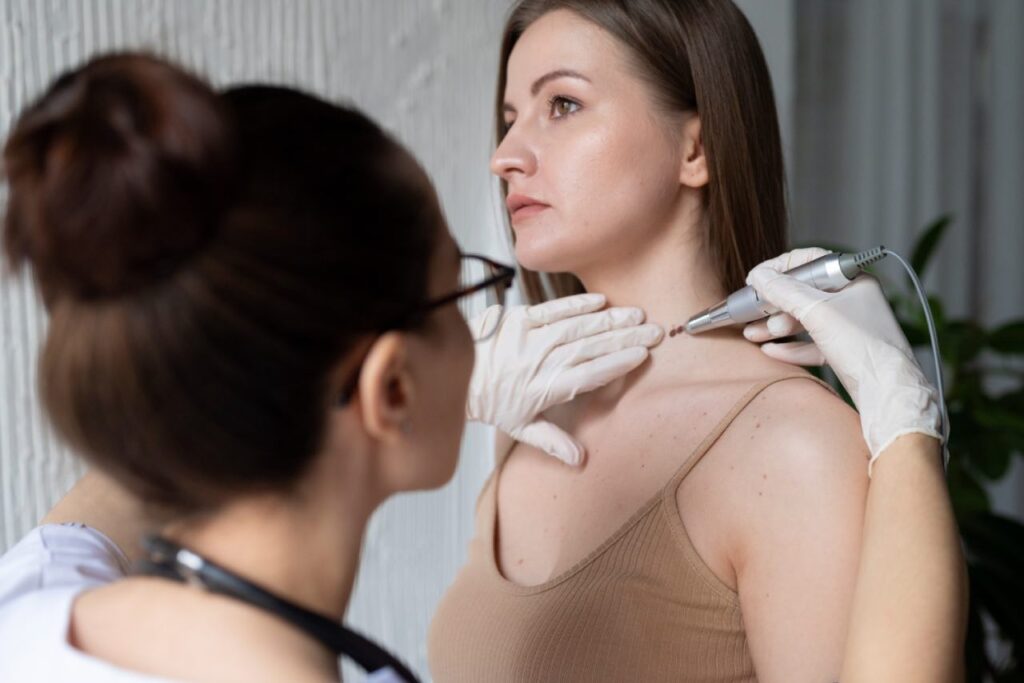
A consultation typically begins with a visual examination of the skin. This may include a full body review to ensure that areas not routinely visible are also assessed.
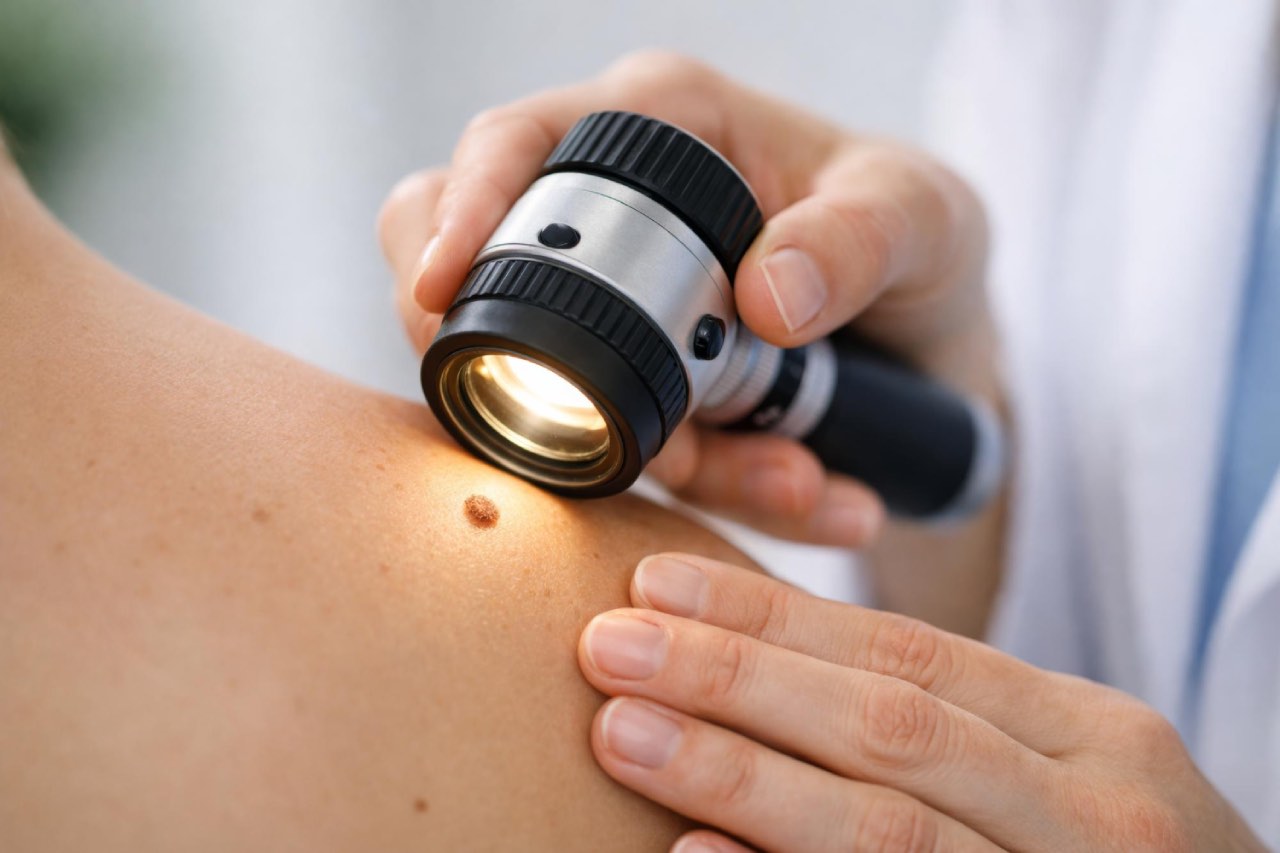
A dermatoscope is often used during the examination. This handheld device provides magnification and illumination, allowing the doctor to examine structures beneath the surface of the skin. It enables more accurate identification of patterns associated with benign and malignant lesions.
The process is non-invasive and generally completed within a short timeframe. Despite its simplicity, it is a highly effective method of detecting early skin changes.
Found a Suspicious Mole? Here’s What Happens Next
If a lesion appears suspicious, further steps may be recommended. This does not necessarily mean that the lesion is cancerous. In many cases, additional assessment is precautionary.
Depending on the clinical findings, your doctor may suggest monitoring the lesion over time or proceeding with a biopsy to obtain more information.
The purpose of these steps is to ensure that any potential concerns are addressed promptly and appropriately.
Skin Biopsies Explained: What They Are and Why They’re Done
A skin biopsy is a common procedure used to investigate suspicious lesions in greater detail.
What Is a Skin Biopsy?
It involves removing a small sample of skin, which is then examined under a microscope by a pathologist.
Types of Skin Biopsies
There are several approaches, including shave, punch, and excisional biopsies. The choice depends on the characteristics of the lesion and its location.
What to Expect During the Procedure
The procedure is performed under local anaesthetic, ensuring minimal discomfort. It is typically quick, and most patients can resume normal activities shortly afterwards.
Mole Removal: What to Expect Before, During and After Treatment
When removal is recommended, the procedure is performed in a clinical setting under local anaesthetic. The lesion is carefully excised, and the area may be closed with stitches if required.
Following the procedure, patients are provided with guidance on wound care and healing. Recovery is generally straightforward, although minor scarring may occur. Clinical techniques are used to minimise visible scarring wherever possible.
Understanding Your Results: What Pathology Reports Can Tell You
After removal or biopsy, the sample is sent for laboratory analysis. The results provide important information regarding the nature of the lesion.
Findings may indicate that the lesion is benign, atypical, or malignant. Each outcome is managed differently, and your doctor will provide clear guidance on the next steps.
Open communication is important at this stage. Understanding your results allows you to make informed decisions about your ongoing care.
Why Ongoing Skin Checks and Follow-Up Care Are Essential
Skin health requires ongoing attention, even after a lesion has been assessed or removed. Individuals with a history of suspicious moles may have an increased risk of future skin changes.
Regular follow up appointments allow for continued monitoring and early detection of any new developments.
The importance of this approach is reflected in national data. The incidence of melanoma in Australia has reached approximately 63 cases per 100,000 people in 2025 (AIHW), reinforcing the need for sustained awareness and proactive management.
Don’t Wait for Symptoms: Stay Proactive About Your Skin Health
Maintaining skin health does not require specialist knowledge, but it does require awareness and timely action.
Recognising changes, seeking professional assessment, and attending regular skin checks are all essential components of preventive care.
At Medsana Medical Clinic, patients are supported by a multidisciplinary team of doctors, specialists and allied health professionals who provide comprehensive and personalised care. Services include thorough skin examinations, diagnostic procedures, mole removal, and ongoing monitoring where required.
If you have noticed a new or changing lesion, or if it has been some time since your last skin check, arranging a professional assessment is recommended. Early evaluation remains one of the most effective ways to support positive health outcomes.
To book an appointment or discuss any concerns, contact Medsana Medical Clinic or visit www.medsana.com.au.
Sources
- Australian Government Cancer Australia. Melanoma of the skin statistics. https://www.canceraustralia.gov.au/cancer-types/melanoma-skin/melanoma-skin-statistics
- Cancer Council Victoria. Skin Cancer Oveview.
https://www.cancervic.org.au/about-cancer/types/skin_cancers_non_melanoma/skin-cancer-overview.html#:~:text=How%20common%20is%20skin%20cancer,mostly%20in%20people%20over%2050. - Australian Institute of Health and Welfare. Cancer Outcomes improving overall. https://www.aihw.gov.au/news-media/media-releases/2025/october/cancer-outcomes-improving-overall#:~:text=Melanoma%20of%20the%20skin%20and,8.1%25%20were%20larger%20than%204mm. https://www.arpansa.gov.au/understanding-radiation/sources-radiation/occupational-exposure/occupational-exposure-workers